Font-Romeu has been THE world reference for altitude training for over 50 years. With more than 200 Olympic medalists having trained at the CREPS, this Pyrenean station has proven the effectiveness of altitude training, and not just for elites. Whether you're a runner, cyclist, triathlete or trail runner, an altitude training camp near Font-Romeu can transform your performance. Here's everything you need to know.
Why train at altitude?
At altitude (between 1500m and 2500m), atmospheric pressure drops and the air contains less oxygen. Your body naturally compensates for this deficit by triggering a series of remarkable physiological adaptations.
Increased EPO and red blood cell production
From the first days at altitude, your kidneys increase production of erythropoietin (EPO), the hormone that stimulates red blood cell production. More red blood cells = more hemoglobin = better oxygen transport to your muscles. The increase in hemoglobin mass becomes significant around day 10 and continues to improve for 3-4 weeks.
Improved VO2max
Back at sea level, your body retains these adaptations for 2 to 3 weeks. Result: your VO2max is improved, your endurance is enhanced, and you run or cycle faster at the same effort level. Scientific studies (meta-analyses published in PMC) confirm that altitude training significantly improves athletes' aerobic capacity.
Capillary network development
Altitude also stimulates the development of blood capillaries that supply your muscles. This adaptation sustainably improves the efficiency of oxygen delivery, even after returning to sea level.
Muscle enzyme stimulation
Exposure to hypoxia increases the production of muscle enzymes involved in aerobic metabolism, making your muscles more efficient at using available oxygen.
Font-Romeu: the ideal altitude for improvement
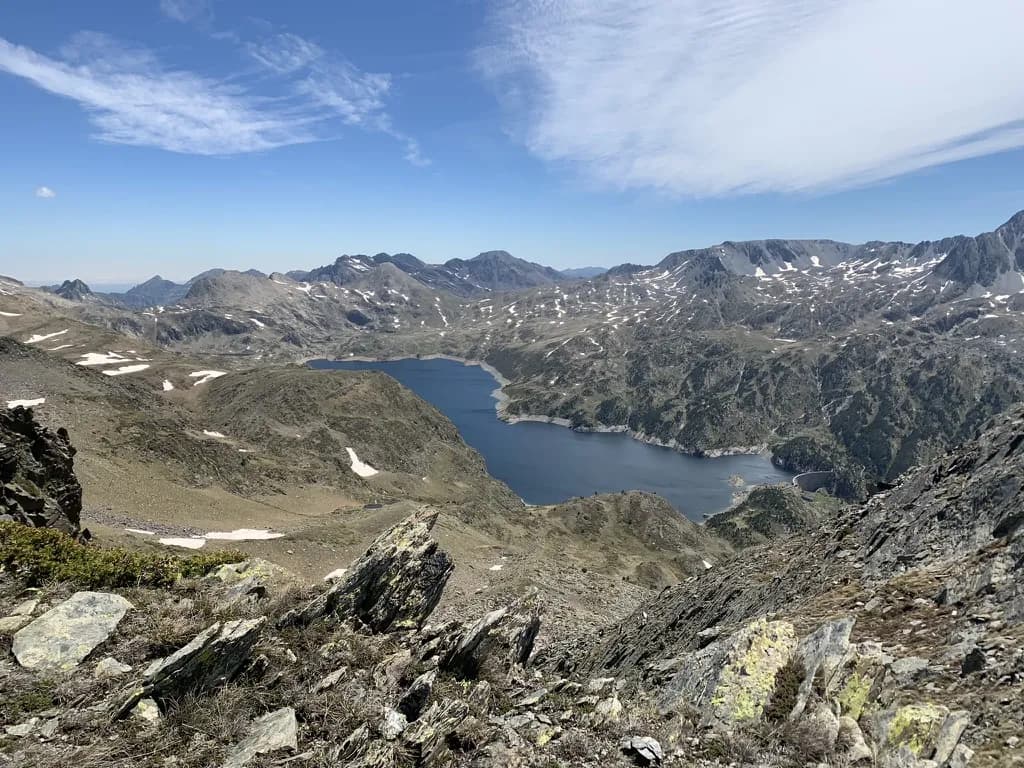
The Font-Romeu / Mont-Louis area sits between 1600m and 2100m altitude, the sweet spot for endurance training. This moderate altitude provides enough hypoxic stress to trigger physiological adaptations, while allowing you to maintain correct training intensities.
Font-Romeu CREPS (1850m) has welcomed athletes from 35 countries since 1967
Over 200 Olympic medalists have trained here
300 days of sunshine per year: exceptional climate for training
Athletics track, Matemale lake, Pyrenean cols. All accessible within 15-20 min
Must-know training routes
The region offers an exceptional variety of training terrain, suitable for all sports and all levels.
Matemale Lake loop - 1550m
9 km loop with only 70m elevation gain. Ideal for first acclimatization runs and basic endurance sessions. The terrain is rolling, partly on forest track, perfect for easy runs and progressive fartleks. 15 min from Mont-Louis.
Font-Romeu track and surroundings - 1800m
The CREPS athletics track (400m, all-weather) is accessible to athletes. Around it, the Pyrénées 2000 cross-country ski trails offer infinite route possibilities in nature at 1750m.
Paula Radcliffe trail - 1950m
Hilly 1.7 km loop with exercise stations, named after the marathon world record holder who regularly trained here. Ideal for strength work and running drills.
La Calme plateau - 2100m
Approximately 2 km loop at 2100m altitude. Reserved for acclimatized athletes (after the first week). Perfect for quality sessions under thinner air: short intervals, intense fartleks.
Pyrenean cols by bike
The Col du Calvaire de Font-Romeu (1836m, 6.65 km at 3.9% from Mont-Louis) is an accessible climb. The road to La Calme (2046m from Estavar) offers a more serious challenge. Cyclists also relish the climb to Puigmal, which rises to an elevation of 2,227 meters.
Sample program: one-week running camp
Day 1-2: Acclimatization
Easy jog 40-50 min at Matemale Lake (1550m). No intensity. Hydration +++. Monitor your resting heart rate and sleep quality.
Day 3-4: Progressive build
Endurance run 50-60 min around the Font-Romeu track area (1800m). A few progressive accelerations at the end of the session. Light strength training.
Day 5: First quality session
Fartlek at Matemale Lake: 15 min warm-up, 10x (1 min fast / 1 min recovery), 10 min cool-down.
Day 6: Long run
Long run 1h15-1h30 mixing routes: start from Mont-Louis, Matemale Lake, surrounding forests. Endurance pace, no pressure.
Day 7: Active recovery
Easy jog 30-40 min + stretching. Use the gym for a recovery session (foam roller, mobility).
Practical tips for a successful training camp
Prepare before going up
Make sure you're in good general shape before heading out. Focus on an iron-rich diet (red meat, legumes, green vegetables) and vitamin C in the weeks before your camp.
Hydrate abundantly
Air at altitude is drier. Drink regularly throughout the day, not just during training.
Increase your caloric intake
Energy expenditure increases at altitude. Prioritize complex carbohydrates, increase protein at each meal, and load up on antioxidant-rich foods (berries, green vegetables).
Respect the acclimatization phase
For the first 3-4 days, reduce intensity and volume. It's counterintuitive but essential. Training too hard too early cancels out the benefits of altitude.
Plan your return
Altitude benefits peak between 12 and 21 days after returning to sea level. Plan your important competitions within this window.
Pour aller plus loin sur ce sujet, consulte notre guide complet : Stage altitude trail : combien de temps partir et quand ?
Why choose Mont-Louis for your Font-Romeu training camp?
Mont-Louis holds a strategic geographic position at the heart of the Cerdagne region. Located between three valleys, Cerdagne, Capcir, and Conflent, it is the ideal central hub to access all altitude training sites in the area.
- Just 15 minutes from the Font-Romeu athletics track (CREPS) and the Matemale lakes, compared to over 30 minutes if you stay in Font-Romeu to reach the lakes, or in Les Angles to reach the track.
- Quick access to three valleys: Cerdagne, Capcir, and Conflent, offering a vast playground for trail running, cycling, and road running.
- Run directly on altitude trails from our accommodation, no car needed.
This central location makes Mont-Louis the perfect base camp for altitude training: spend less time driving and more time training, with unmatched access to the region's diverse terrain.